What happens when the medical cannabis system veterans depend on becomes more expensive, less accessible, and increasingly disconnected from their needs? In Part 2 of this candid conversation, veterans Rob Sipes and Natalie Forcier—joined by cannabis nurse Kala Knudslien—explore how education, professional guidance, and intentional cannabis use can help veterans manage PTSD-related sleep disturbances, chronic pain, and inflammation. Rob shares how he incorporates CBD, THC edibles, and topical cannabis into a carefully structured routine while living with serious medical challenges, including hemodialysis, neuropathy, two lung conditions, oxygen therapy, and a complex medication regimen. His experience reinforces one of the episode’s most important messages: veterans using medical cannabis, especially alongside multiple prescription medications, benefit from individualized assessment, ongoing follow-up, and knowledgeable healthcare support. The conversation also examines Veterans Affairs Canada cannabis reimbursement limits, the potential relationship between medical cannabis, and polypharmacy, and the widening gap between Canada’s medical and recreational cannabis markets. As recreational producers increasingly prioritize high-THC products, Kirk and Trevor ask whether veterans and other medical patients are losing access to consistent CBD-rich formulations, balanced cannabinoid products, and the clinical guidance needed to use them safely and effectively. This episode is a thoughtful, human look at medical cannabis for veterans—and a warning about what could be lost if Canada’s medical cannabis system continues to shrink. Listen now to hear Rob and Natalie’s stories and learn why cannabis education, professional support and reliable access remain essential parts of veteran care.
E181 - 2 - Why Veterans Turn to Medical Cannabis
https://reefermed.ca/component/k2/item/210-181-2-why-veterans-turn-to-medical-cannabis#sigProId15168f1059
Research Links
Music By
Desiree Dorion
Marc Clement
(Yes we have a SOCAN membership to use these songs all legal and proper like)
Episode Transcript
Rene: Well hello there, it's Rene here back in the studio and today we're going to continue listening to a conversation with Rob and Natalie who are doing some great things with and for cannabis and veterans.
Rob Sipes: On the current platform I'm on, I put in an order, expecting what I normally ordered, and I got half of it. And I called them and said, what the fuck is this? He says, well, that's your limit with the new restrictions.
Kirk: Oh, okay. Wow.
Rob Sipes: So I bought some from a recreational store. Thank God I found a rec store that had the deal of a lifetime. 10 a 10 pack for $17.90.
Kirk: Of the gummies yeah.
Rob Sipes: Yeah of the 10 milligrams
Kirk: yeah. Is that good?
Rob Sipes: That's a great price.
Kirk: I don't know.
Rob Sipes: They're usually $5.85 a piece, and I got a 10-pack for $17.
Kirk: Okay, nice.
Rob Sipes: Yeah, I bought like six of them. Kayla bought a couple because they were cheap. So why were they on sale with these? They're not on sale. That's not on sell. They're not on sale, that's the way they got around the packaging, so you know how you can only have 10 milligrams per pack? Yeah, so what they ended up doing was they have 10 individual packages within one big bag. Oh $17 for 10 packages of gummies in one bag. Oh gosh, innovation. So it's like a $1.70 a pack. Loop hole. Yeah.
Kirk: Is there anything I didn't ask you about Veteran Affairs and using cannabis as vets? What is the most important thing about using cannabis as vets.
Natalie Forcier: I would say... Go ahead.
Rob Sipes: Get professional help.
Kala Knudslien: Yes.
Rob Sipes: So there's some organizations. There was one, I'll say it, Kala's old company, The Cannabis Nurses, that I went through that. They paid for it for the session. They contacted us. They made us complete an online thing that said our medical conditions and the medications we're taking for those conditions, and sent them to them. They reviewed all of them to see if anything was not compatible with THC and CBD. And then they came to your house, spent at least an hour or two going through it and an education session about 16 endorphins and all that.
Kala Knudslien: The endocannabinoids.
Rob Sipes: Endocannabinoids, whatever, it went right over my head. But they did it. No, but because of those sessions, and then they also followed you up for three months. They don't prescribe, they gave recommendations. What you're taking is wrong, you're doing it the wrong way. If you want to do it best for your health, which I'm very keen on, this is what you should be trying. And that's why I'm leaning now more. So my, my weed routine now is wake up in the morning, uh, have a shower. I put the weed cream on my feet and on a couple other areas that my arms and stuff like that, my neck that bothers me and then, uh off to work. Whatever I'm doing that day. And then when I get home, if you're having a bad day, I have my daytime gummy. And then an hour before bed, I take my 20 for sleep and I put the cream on again. So twice a day I'm using the cream. I'm use gummies maybe twice a days. I don't use them in the daytime because I'm driving. If I'm going to drive and I'm in pain, I use Nabilon, the synthetic. I have a prescription for that that I can use as a synthetic and you can drive on that because I don't get a high. So I use that for the pain if I'm pain during the daytime.
Kirk: Do you mind if I talk about some of your medical conditions?
Rob Sipes: Sure.
Kirk: OK, so you are on hemodialysis.
Rob Sipes: I'm a dialysis patient, hemodialysis. I've been doing that six and a half years. I'm three times a week for four hours, and I also have two lung conditions that I'm on oxygen 24/7.
Kirk: So are you on another are you want other pharmaceuticals like do you have a patch.
Rob Sipes: Oh yeah Yes, you have it being I'm on 16 meds.
Kirk: Yeah, that's what I was gonna say So when you're being dialysized does this cannabis play a role at all in this do you tell them that you're doing cannabis.
Rob Sipes: Oh they know about it.
Kirk: So how does I like how does it work in a dialysis? How does cannabis work through the dialysis?
Rob Sipes: There's no impact. Unless i can't drive yeah i can drive under the influence.
Kirk: Of the thc.
Rob Sipes: Of the THC yeah yeah but my daily CBD yeah what is it 40 milligrams.
Kala Knudslien: Yeah.
Rob Sipes: I'm doing a daily 40 of CBD um yeah, I take that in the morning.
Kirk: And your primary using cannabis for PTSD.
Rob Sipes: Yeah for my sleep.
Kirk: And and for your sleep.
Rob Sipes: Sleep disturbances yeah.
Kirk: Due to that and then also the creams for local pains or deep pain.
Rob Sipes: Inflammation and pain.
Kirk: And then and as you
Rob Sipes: And actually, that one, what's that one?
Kala Knudslien: Proofly?
Rob Sipes: The Proofly...
Kala Knudslien: Mega Cream.
Rob Sipes: The Mega Cream, the Proofly Mega Cream on my feet, my feet have never been so healthy.
Kala Knudslien: Neuropathy in his feet
Rob Sipes: I have distal neuropathy in both feet. It's called demyelating neuropathies.
Kirk: Yeah, are you a diabetic as well?
Rob Sipes: No, I'm not.. My kidney disease is not average kidney disease. It was exposure overseas that caused retroperitoneal fibrosis that shrink wrapped my kidneys. It literally took them from the inside.
Kirk: Damn. Well, thank you for your service. Thank you. And I'm sad that beat the shit out of you.
Rob Sipes: If you think VAC pays a lot for weed, you should see what they pay for kidneys. I am 164% disabled according to Veterans Affairs.
Kirk: Amazing. Any comments from you at all about anything about using cannabis as a vet or?
Natalie Forcier: No, just to reiterate with what Rob said, the education piece is a huge component to being able to use it properly, intentionally, to be able to fit it into your life to improve your quality of life. And just understanding, utilizing it for bedtime, regulating your sleep, and restoring or storing traumatic memories in a healthy way. There's some significant benefits, and I still learn all the time from Kala. About how to use it properly, when to use it, and so there's some significant benefit and healing that can come from it, using it in a in an intentionally way. So I think the education piece is often times missing for veterans and I know a lot of them that are just will take massive amounts before sleep because they just want to sleep, But there's ways of teetering your dose throughout the day so that you don't need significant amounts to sleep. Your body has this consistent system and we all struggle with bone and joint issues having served in the military so the inflammation that's there and our sleep are probably the biggest benefits that cannabis can support with.
Kala Knudslien: And helping that system go from that fight-and-flight, hyper-vigilant state into a more of a safe, parasympathetic, rest-and digest kind of state as well. But it's a whole daytime, it's whole regime. It's not just a knockout at the end of the day to dissociate and knockout like the same.
Rob Sipes: And when I worked at Bissell Center, after I retired, I worked there as a social worker. They didn't know I was using weed. Yeah. They didn’t need to know. No. It was prescription. But nobody, they didn’t know I used weed. yeah, I'm highly functional. Most people don t, unless I tell them, they don t know I'm using weed every day just to make that appearance.
Kirk: Just to get to sleep.
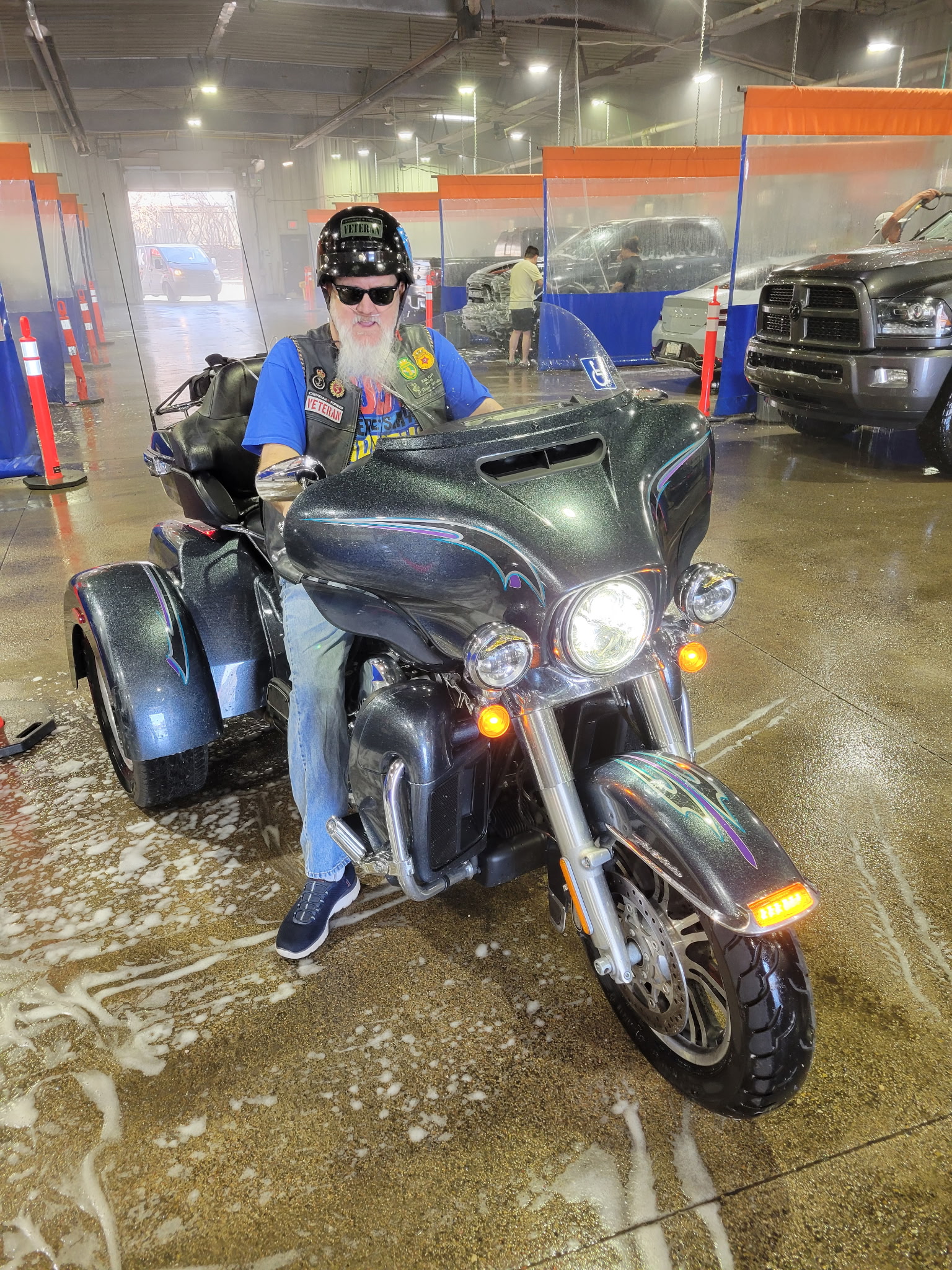
Rob Sipes: Yeah. Well, no, but also to be healthy enough to go out and get out of the house. Yeah Yeah Like I'm still actively riding my motorbike riding
Kirk: Yu have a Harley, what do you got?
Rob Sipes: I got a Harley trike. I got to Tri Glide downstairs.
Kirk: Of course you do.
I got it washed today. I gotta put my oxygen tanks some wheres
Kirk: Oh my god, so you go down the highway with oxygen on and then, oh, I want that picture.
Rob Sipes: I have one, I took one today.
Kirk: That's hilarious.
Kala Knudslien: Still living.
Kirk: That's hilarious that's funny.
Rob Sipes: Yeah if you look close enough you'll see the.
Kirk: Oh yeah
Rob Sipes: I got the nasal cannula
Kala Knudslien: Did your dialysis doctor make you switch from a two-wheeler to a trike?
Rob Sipes: Two years ago, my doctor said, because you pass out, I don't want you riding your bike to the hospital.
Kirk: Well, yeah, because after dialysis-.
Rob Sipes: Yeah, he says, I don't want you, you're not stable enough. Yeah. So I hummed and hawed, and I'm like, I'm not giving up biking. So I hummed and hawed, and then I went, did some Googling and found a trike.
Kirk: bought a Harley trike.
Rob Sipes: Harley Tri-Glide.
Kirk: Yeah, that's uh, and I guess you're not gonna you're, not gonna go for a Spyder.
Rob Sipes: No None of my friends would ride with me.
Kirk: That's cool, that story thank you for that story you guys thank you very much
Trevor: So Kirk I know you want to spend a bunch of time on Veterans Affairs but before that let's just touch on a couple things that I thought were interesting. So Natalie our massage therapist slash like you said can seem to be able to find everything in Veterans Affairs. So she was a medic in Afghanistan and other places. PTSD. Sort of found that black market cannabis was helping her deal with that and then eventually found through massage therapy that it was helping other people. So that was really interesting and then like you said Rob who 26 years a medic in the navy and elsewhere a whack of medical conditions so again like Natalie PTSD seems to be one of the main things cannabis helps him but you know as you went on he's got he's on dialysis and for those of you not familiar people on dialysis are on a whack of medication just when your kidneys don't work nothing else works so you know he's at 16 different prescription meds; two different lung conditions; requires oxygen uh peripheral neuropathy in his feet. So pain in your feet caused by nerves misfiring most often around here when we talk about that that's a diabetes thing but as he said, not a diabetes thing in his case. But, yeah, he again promised his dad he wouldn't do drugs anymore when he went in the military. And then when he got back out and cannabis was suggested, had to go back and basically ask his, or felt he should go back to his dad 30 years later and say, Dad, I'd really like to try cannabis medically. And kind of got permission. You know, just a very human story that I got to chuckle out of. Like you said, Rob's a real character and I know you want to spend some time talking about Veterans Affairs but anything else you want sort of highlight from Natalie and Rob stories?
Kirk: Yeah, again, I had no clue these individuals were going to be medics, and in one of my past careers I spent 13 years, 14 years in the pre-hospital care industry in Alberta. So as we started telling and sharing stories, it ends up that they're friends of a colleague of mine that I worked, I spent years working with in Alberta, and a shout out to Peter Symons. Who was, I remember being, I believe in the Reserves and has since gone off into mountain rescue work and works with the veterans as well. So shout out to my old friend, Peter. What I got, what these individuals sort of did for me and it's sort of like you know you do your reading you you read about we study about how people uh have benefited from cannabis and and you know have dropped um dropped using polypharmacy and examples like that. Uh I think it was 2007 when Veteran Affairs Canada recognized cannabis as medicine. And once again, again, I don't know. I don't know if I heard it through the story or heard it generally through my my immersion into veterans affair. But did they mention that essentially, it was the federal courts once again, that told the government that cannabis was medicine for veterans? Yeah, was that mentioned in this?
Trevor: Yeah, it was Rob and one of the nurses, sorry I lost track of which one, said yeah, it was a veteran who said, hey, you're paying for my medical conditions, this helps my medical condition and basically won the right for veterans to have cannabis paid for as medication.
Kirk: Yeah, yeah, so and I guess we should backtrack here and say there there were four voices in that conversation, right? We heard from Rob Natalie and myself and in the back was Kala. So she was answering some of the Questions as well, but getting back to Veterans Affairs. So what I learned and this is from meeting people now and and and again just how Cannabis helped them not be addicted to a whole bunch of harsh pharmaceuticals. And we've discussed this before how mental health conditions are often solved through some very heavy-duty pharmacology. And I mean you can speak to that better. The you know the antipsychotics, the antidepressants, some of those are harsh medications that have severe severe side effects. And what happens is That's it. You know one medication has a side effect so you get another medication to do the offset the side effects so sometimes you take one medication you should always take another so again you would know this better but it seems that when cannabis enters the picture over time people learn not to be on some of these harsh pharmaceuticals and cannabis decreases the amount of polypharmacy happens. This is one of the benefits cannabis is doing for vets but now with with veteran affairs and this was what the April 1st budget and they'd speak to this how the government lowered lowered the exemption from eight dollars and 50 cents per gram to six. So, and the other thing that Veteran Affairs has is regards to eligibility. They will pay for three grams a day. But they also have an exceptional clause that with the proper diagnosis and proper medical support, they will fund more than three dollars a day, but they now only fund Six dollars per gram. So now what's happened is we now have veterans who may have to now pay out of the pocket to pay for the medicine that decreases their use of harsher drugs.
Trevor: Yeah, no, and I thought it was an interesting, I'm not quite sure, economics thing that so the medical system, which I didn't realize before this story, how much it was basically funded by Veterans Affairs, because there were medical patients who got stuff through the medical system and we touched on this a little bit. And there was, there was lots of interest in the medical system. Like you said, even Shopper's Drug Mart for a while was a, a place you could get medical cannabis. Um, but, uh, it sounds like a majority or a large chunk of the people getting through the medical systems were veterans. Um, and because of that, the companies felt okay with charging more. Or at least not being really competitive with their prices on medical cannabis because Veterans Affairs were gonna pay for it. Whereas in the rec market, there are so many stores and so many LPs, so much more competition, the price dropped. And that sort of led to some interesting issues where because the price drop, you know, Veterans Affairs being an arms-length government group said well, you know the rec market price is lower than so we'll we'll basically pay less than the medical price and. I'm sure it's more complicated than that, but one of the two of the sort of side effects one is you know like you said now the veterans are basically getting less bang for their buck. They're not getting as much cannabis as they used to because the Veterans Affairs is paying less less for it. The other, just sort of looking down the road, if only Veterans Affairs was kind of funding the medical model, and we've already seen, there seems to be pressure from Health Canada to kind of get rid of the medical models, is the medical going to just go away altogether? Is this decreasing what Veterans Affairs will be paying? Like we mentioned during the thing, and we mentioned on other ones, like the Shoppers Drug Mart already got out of it, because I assume. They found it wasn't particularly profitable. And if one of the only people who were paying was Veterans Affairs and they're now paying less, I think a really important system is leaving. And this sort of goes back to Ted Smith episode or two ago. Like remember, Rob is on many, many other medications. So Rob mentions it and I think should be, Rob shouldn't really be using cannabis without medical supervision because the cannabis he's on could interfere with, you know, some of his kidney stuff. Like, there's lots to be looked out for. And several of them mentioned, you know if you are a veteran and on a bunch of medication with a bunch of problems, which kind of happens as you get older, then, you know, having a medical team around you is good. And it kind of looks like the nurses, etc, who you've talked to running these medical clinics, and we'll hear more from in future episodes, are doing really good work. Is this another reason why that might be going away if the money that's funding it is going away? So that was just something twigged in my brain.
Kirk: Yeah, I know it's it, you know, the more and more of these shows that we do, the more we learn about cannabis, the more I realize what I don't know in some ways. And here's something that I've discovered in the last little while, a couple years ago, when we started this podcast, a friend of mine, my neighbor basically said that one of our little happy hours, um, she said, you know, well, medical cannabis is different than rec cannabis. And I was, you know, I was at the point and said, no, no it's the same plant. It's the same thing. But there was a nuance to what she was saying to me that I'm slowly learning as we study this plant is that there is a difference in how cannabis is used in the medicinal market as a medicine than the Rec market and for example, the whole CBD thing, I mean, the Rec Market, and we've learned this in the last several episodes, the Rec Market is really focusing on high THC products because that's where the profit margin is, right? And so, the medical market doesn't offer a large profit margin because, the cannabis that medicinal people are looking for aren't necessarily high THC flowers or pre-rolls. I mean, the medical market, the guys aren't going to afford, you know, the pre- rolls are expensive. So, they're looking for a CBD product, usually. They're usually looking for more full plant spectrum products. They're looking the entourage effect, the ensemble effect. They're look for the medicine to have a specific effect on the endocannabinoid system to make them feel less stress, for example, sleep, you know, a little bit of THC with CBD and CBN will help you sleep. So it's different markets, so you're correct. If this if the medical market was supported by the vets and now what's happening is that the government has got this circle game going where well gee whiz you know the vats can get cheaper medication at the rec shop they might as well go to the rec shops where the rec shops not focus on medicine. So now the whole ability to get consistent medicines changing. I mean, three, four years ago, when you're talking to a medical patient and they said, well, you know, I could go to the rec shop and get my medicine and we thought that was good because, okay, it's down the street. But now, coming forward with what's happened to the rec market is that they're more focusing on THC, how a lot of the LPs are falling away, so the market is getting more congested with big growers. So big growers have bigger profit margins need a perfect bigger profit margin. So they're going to THC There's a snowball effect happening. Meanwhile, the people that started this whole game the ones that made the original snowballs. You know that went to the Supreme Court and said give us cannabis. They're, again, getting forgotten. They're melting, right? It's and this is again, this story just touches this. And and like I said, you know, Rob's quite a character he's known throughout the Edmonton area. He rides his trike still. I've got a picture of his trikes. It'll be on a web page, and I'm sure you'll use it as the icon. No, it's it's it's another story to get into, you. Are we, we're losing the medical market.
Trevor: Well, and just another sort of plus for the medical market that just, again, try not to put everything back to Ted, but Ted Smith was talking about how it's important for his sicker patients to have some sort of, we'll call it medical intervention or medical team around. The cannabis nurses, which again, on their own will be a future episode, as Rob was saying, when he started using cannabis to sleep, he was going for the really high THC stuff to knock him out. And the cannabis nurses came along and said, hey, you know, you probably don't need this huge THC. If you have a CBD, CBN, CBG combo, you'll probably sleep better. You don't as high a THC, you won't feel as stoned the next day. So just that medical guidance, medical intervention, I guess we've talked in the past whether it comes from a nurse, pharmacist or a unregulated cannabis educator, having basically, and this is making you sound like a pharmacist paying for the cognitive services of a medical professional to sort of give guidance to these especially sicker people, is a good thing.
Kirk: That was a really good sentence.
Trevor: Well, yeah. Pharmacists don't do, you know, we we're, we're professionally idiots and we don't get paid for our cognitive services. That's a completely different podcast.
Kirk: Yeah, completely different podcast. And you're but but also, I mean, you look at pharmacists, again, a different podcast, you guys are on the fee, fee for service side, right?
Trevor: Yeah,.
Kirk: We nurses, we tend to be we tend to be the employees of the system. And what makes this what makes the story unique. And again, we're really really pushing this first forward story is that I hope to have a panel discussion of cannabis nurses from across the country talking about nursing and cannabis. So that's something I'm working towards. So this was, this I think was our introduction to Veteran Affairs. We've done other Veteran Affair stories, but they were more American based, right? You had a fella, Vietnam vet.
Trevor: And Sean Pooley dealt with vets, but I don't know, I felt like, no, Sean's episode was great, but this was filled in a bunch of holes for me that I guess I didn't realize. I really enjoyed this one.
Kirk: Oh, one thing I failed to mention, and this goes back to Rob, Rob's medical conditions are a direct result of his experience in the Gulf War. This is not a guy that's aging blaming it on, blaming on his, you know, years of serving our country. This was a direct results of exposure, and he never really explained what that exposure was, but I imagine as a medic, he was into some pretty, pretty exposed places. So.
Trevor: Yeah, you could be right there on the front lines with the guys getting bombed and gassed and, and, and,
Kirk: Yeah, yeah, I am. Back in the day in the 90s, I met up with a lot of medics and training programs and stuff that I shared training with them. And I also lived very close to Cold Lake. Actually, now that I think about it, I taught a course in Cold Lake on trauma care. That was a long time ago. Just thought of that.
Trevor: My son's right now in Cold Late cleaning ducts, but that is get a different podcast I'm anything else you want to talk about Veteran Affairs, Rob, Natalie or your cannabis nurses before we wrap this one. Up
Kirk: Oh, so much to say, Trevor, but so little time. I'm Kirk Nyquist, I'm the registered nurse, and you have Reefer Medness The podcast.
Trevor: I'm Trevor Shewfelt, I'm the pharmacist, another good one. And thank you for your service, both Rob and Natalie. And not enlightened in a good way, you know, I wish Veterans Affairs was doing more better stuff. But I found this really enlightening about how Veterans Affairs and cannabis and some of that paperwork went and kind of feels like we're just starting down a Veterans Affairs rabbit hole.
Kirk: I hope so, I hope to have more stories in the future. So many stories, so little time. Hey, maybe someone out there will help us and fund some stories.
Trevor: Sounds good. All right. Talk to everyone next time.
Kirk: Bye bye.